
The 4 Assumptions That Break Most MVPs (and How to Test)
Learn the four hidden assumptions that derail MVPs—and a simple way to rank risk and run fast tests before you build.
Why most MVPs fail: you built the feature, not the thesis
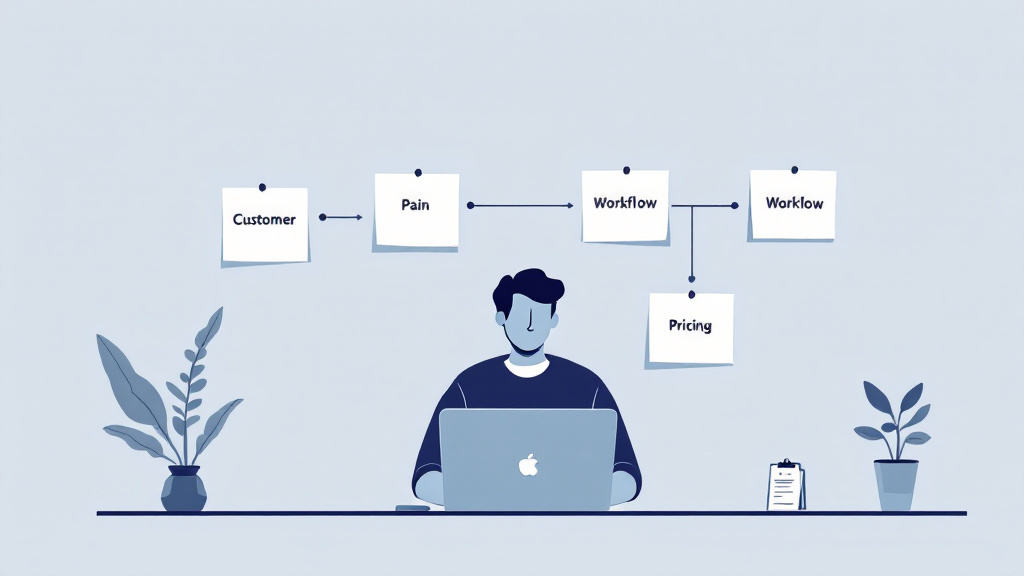
Most MVPs don’t fail because the code is bad—they fail because the idea was never made testable. Early founders and product leads often jump straight to building, then discover they picked the wrong customer, solved a mild annoyance, or designed a workflow nobody will adopt. That’s why “startup validation” is less about speed and more about surfacing assumptions before they become sunk cost.
At ConceptHarbor Ventures, we treat an MVP as a product thesis: a set of explicit bets about who it’s for, what hurts, how work gets done, and why someone will pay. If those bets are vague, your roadmap becomes a guessing game.
The good news: you can de-risk an MVP without months of research. With structured customer discovery and a lightweight brief, you can turn “an AI tool for contractors” into a clear wedge use case, a measurable success metric, and a small scope you can actually ship. The rest of this post breaks down the four assumptions and how to test them fast using interviews, smoke tests, and concierge trials—core tools in modern product strategy.
The 4 assumptions inside every MVP—and how to rank them by risk
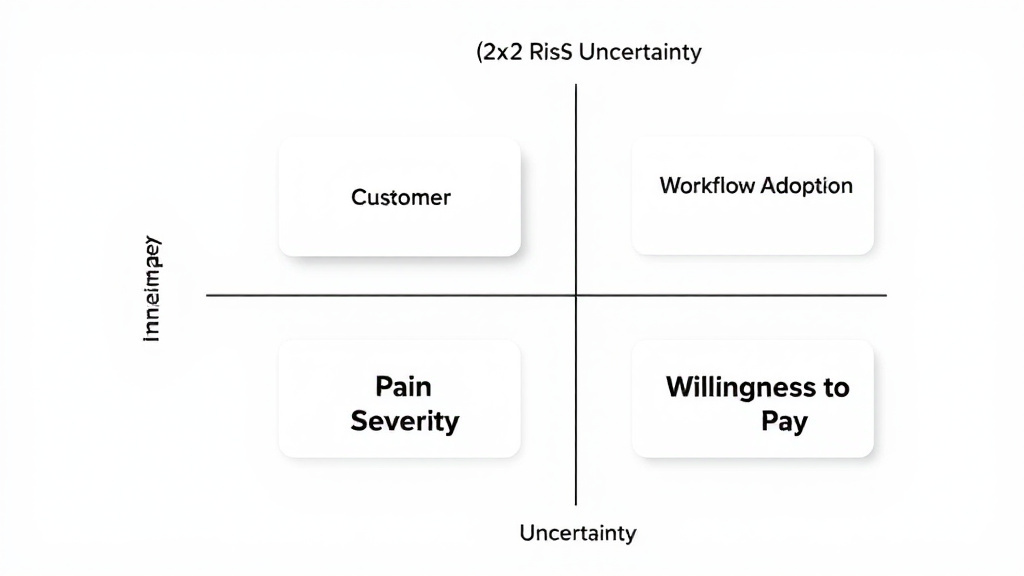
Every MVP idea hides four make-or-break assumptions: (1) Customer: you’ve identified a specific buyer and context (not “small businesses,” but “residential remodelers with 10–50 employees”). (2) Pain severity: the problem is frequent, costly, and already felt—not a “nice-to-have.” (3) Workflow adoption: the solution fits existing habits, permissions, and tools; it can be tried without reorganizing the company. (4) Willingness to pay: there’s budget, urgency, and a credible pricing path—especially important for SaaS where switching costs and renewal risk matter.
To prioritize what to test first, use a simple risk ranking: score each assumption on Impact (if wrong, does the MVP die?) and Uncertainty (how confident are you today?). Multiply them to get a risk score. Typically, customer and pain outrank features; if you’re wrong there, no amount of automation helps.
Capture the top two risks in a structured brief: the wedge customer, the trigger moment, the core workflow, and a 30–90 day success metric. This turns “assumptions” into an executable customer discovery plan and keeps product strategy anchored to evidence.
Fast tests that prevent waste: interviews, smoke tests, and concierge trials

Once you’ve ranked assumptions, design the fastest test that produces a binary learning signal. For customer and pain severity, start with 10–15 interviews focused on recent events: “Tell me about the last time this happened—what did it cost?” Ask about current alternatives to understand real behavior, not opinions—this is the backbone of customer discovery and MVP planning.
For workflow adoption, run a “day-in-the-life” prototype: a clickable flow, a Notion doc, or a lightweight automation that mirrors the core steps. Look for friction points like approvals, data access, and edge cases that break the workflow. If adoption requires new roles or habits, your MVP scope is too big.
For willingness to pay, use a smoke test: a landing page with pricing, a waitlist tied to a specific outcome, or a paid pilot offer. The most decisive option is a concierge trial—manually deliver the value for 2–3 customers and measure a 30–90 day metric. Package learnings into a one-page brief (shareable in Google Docs/Notion, PRDs, and investor updates) so your startup validation becomes repeatable—and your MVP becomes the smallest measurable wedge.